About Me
Early in my career, I made comics, then I made video games; now I make comics.
Dark ones, mostly.
Most of my stories start as dreams. Honestly. I have particularly vivid dreams that occasionally have a narrative. Sometimes they provide enough scaffolding for me to stretch a story around them. A secret: all my stories are connected.
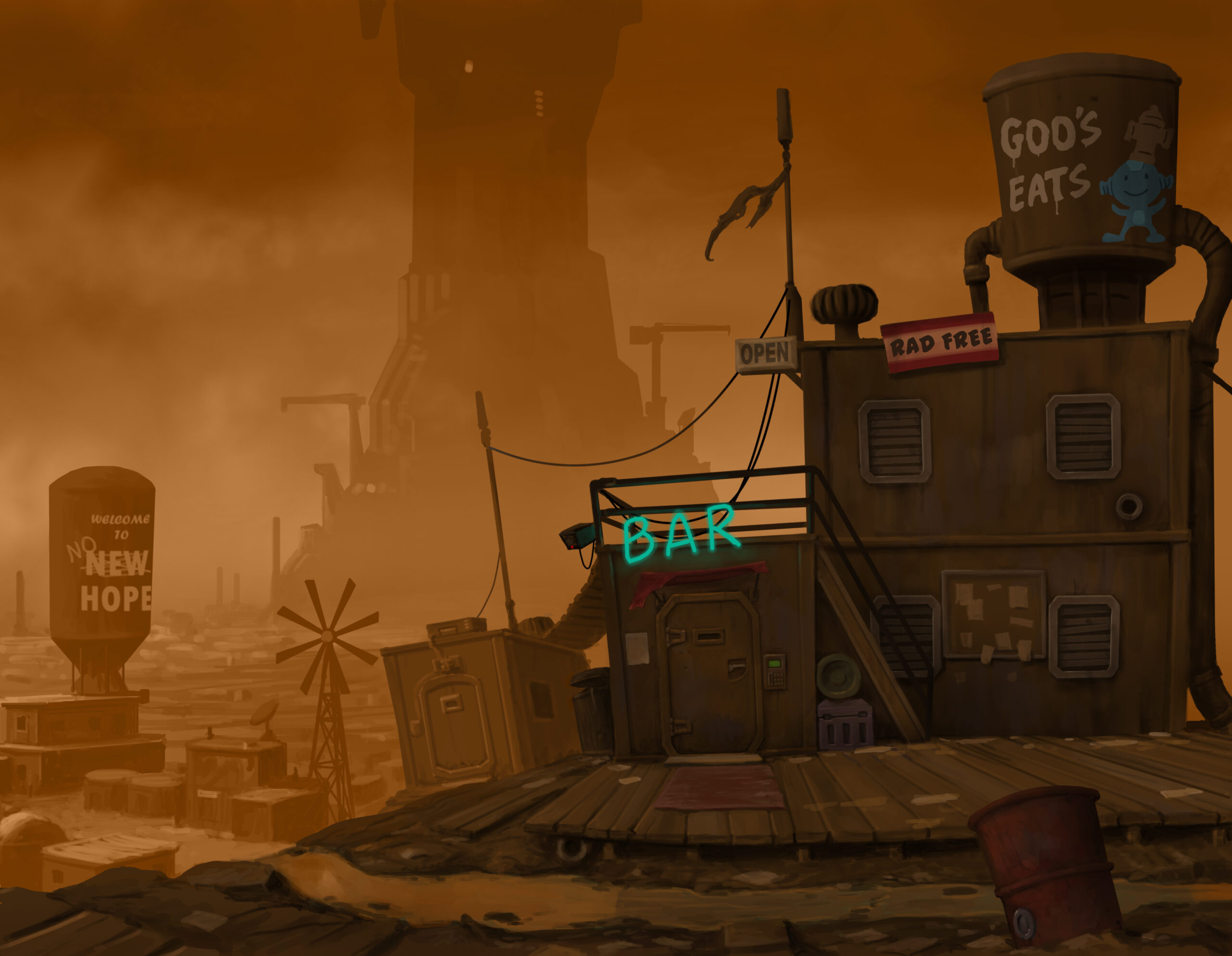
Random color sketch
Why comics
I’ve always drawn. I’ve always been the person doodling on a notepad when I should have been paying attention to whatever was supposed to be happening.
I have a world of stories in my head, and comics let me bring them to life without needing a small army.
This may sound sad, but m favorite thing is getting up in the morning, making coffee, and jumping straight into my work.
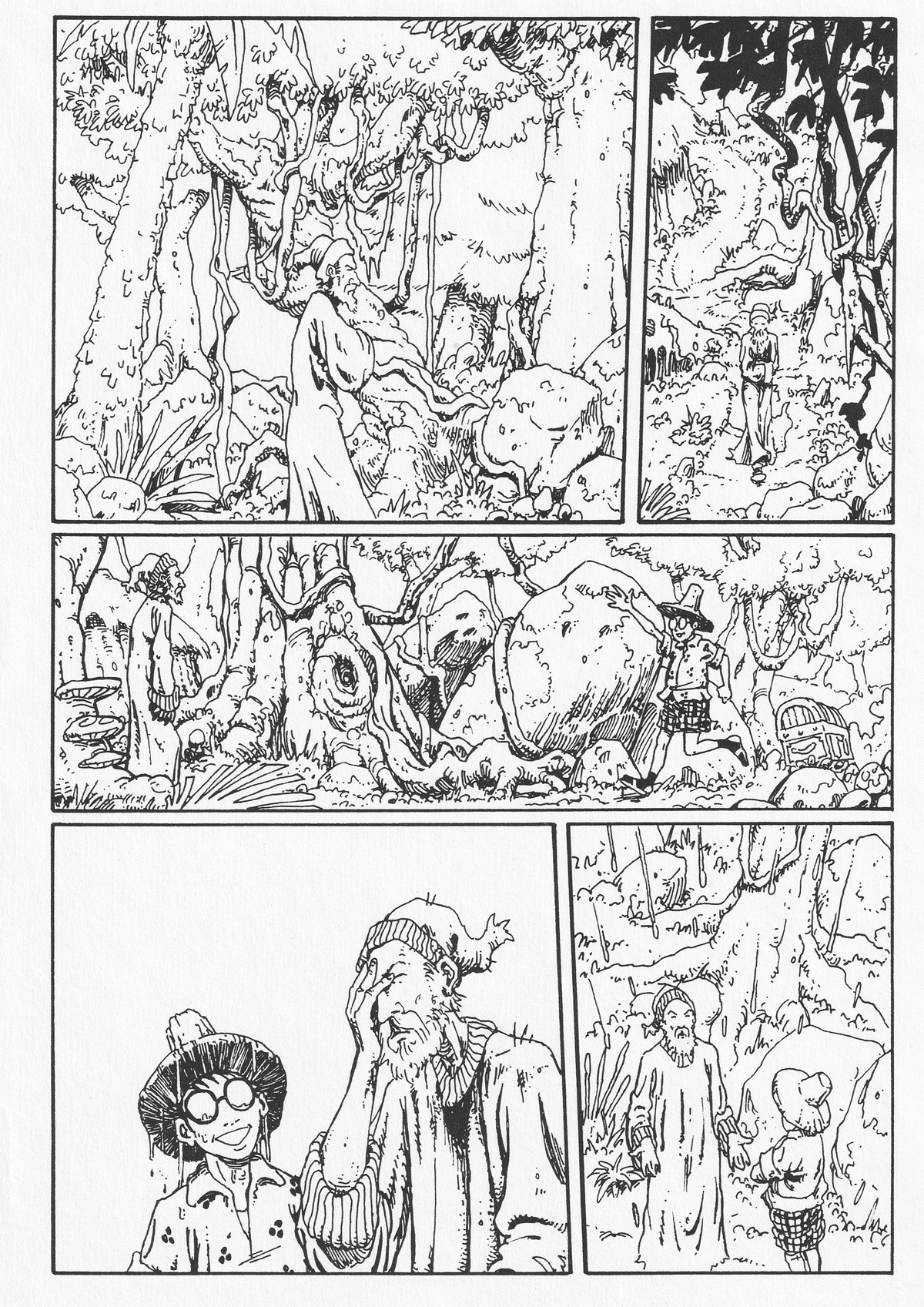
The Light Fantastic – 1992
Back then, I did one page a day: pencils, inks, and colors. It was brutal!
Influences
Let’s start with this: what profession comic book artists do, blows my mind. These people have to know how to draw effing everything: people, expressions, hands, architecture, animals, trees, weather, vehicles, clothes, hair. They have to understand things like composition, perspective, lighting, anatomy, foreshortening, and staging/storytelling. If they get a script that has scenes of a donkey but have never drawn one before, no excuses, figure it out.
Like many of these lunatics, I’m self-taught; drawing away at my mom’s kitchen table while copying comic book art.
Early on, I fell in love with the Uncanny X-Men, and it was all about John Byrne.
Then there was Heavy Metal and Moebius. When my friends and I discovered Moebius, it was like some secret unlock; his lines, his techniques, seemingly so easy to deconstruct. Then, after learning a few of his ‘tricks’, came the dawning realization of how far we still had to go.
Mobius led to Enki Bilal; he showed me that it was possible to go somewhere new with the medium. God, I love his art.
Along the way, a few others jump out (artists whose work I just had to own): Masamune Shirow, William Stout, Simon Bisley, Mike Mignola, and Katsuhiro Otomo.
There truly are so many great artists in the field, but the last I’ll note here is Tsutomu Nihei, specifically his Biomega stuff. The man amazes me; with every new series, he changes his style. But like Simon Bisley in his ABC Warriors days, Nihei seems to have put maximum effort into Biomega. And to be fair, that level of intensity may just not be sustainable year over year.
Just a note on this: all artists seem to go through this trajectory; they start off just wanting to be good, you know, just solid draftsmen (draftspeople?). Then they push to get ahead, to do something new and different, then maybe success, maybe family, or just life intercedes, and they start to settle into comfortable rhythms. Me, having spent so many years doing 3D work for video games, I’m still trying to find my voice. At least half of what I’ve done I wish I could go back and redo, but we all know where that leads. I absolutely love the fact that with art, you never stop finding new challenges.
Finally, I have to mention a few other non-comic book art influences: H.R. Giger (surprise!), Syd Mead, Frank Frazetta, Ron Cobb, Joe Johnson, Ralph McQuarrie (I still get a thrill seeing a Star Destroyer or the Millennium Falcon on the screen), and the Warhammer 40k universe. Yep, super nerd.
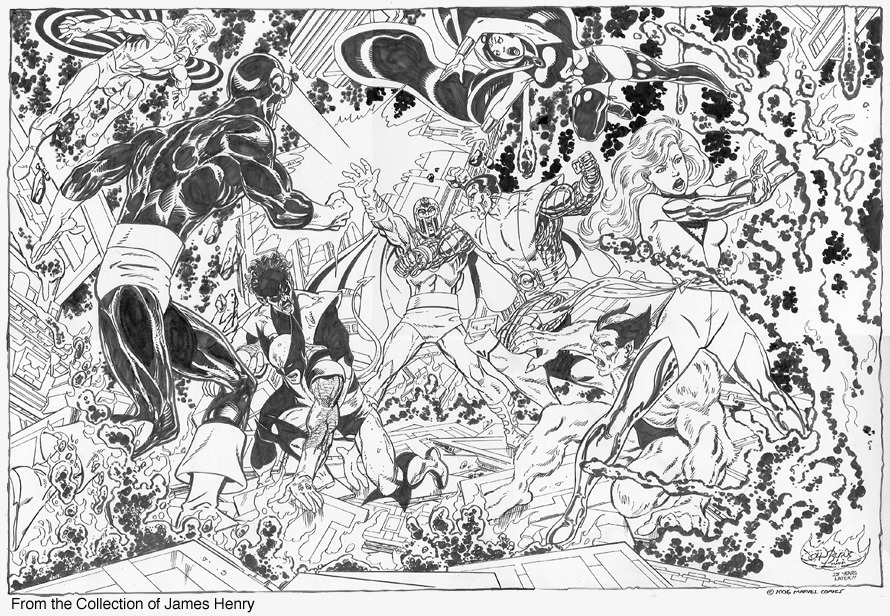
John Byrne
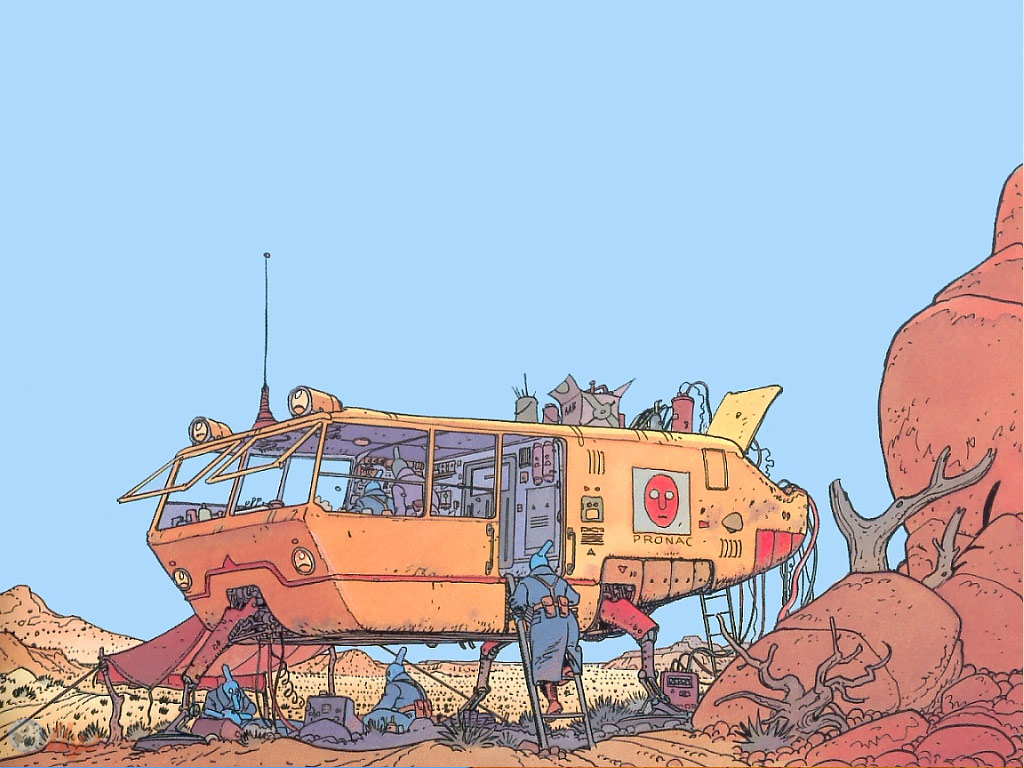
Moebius
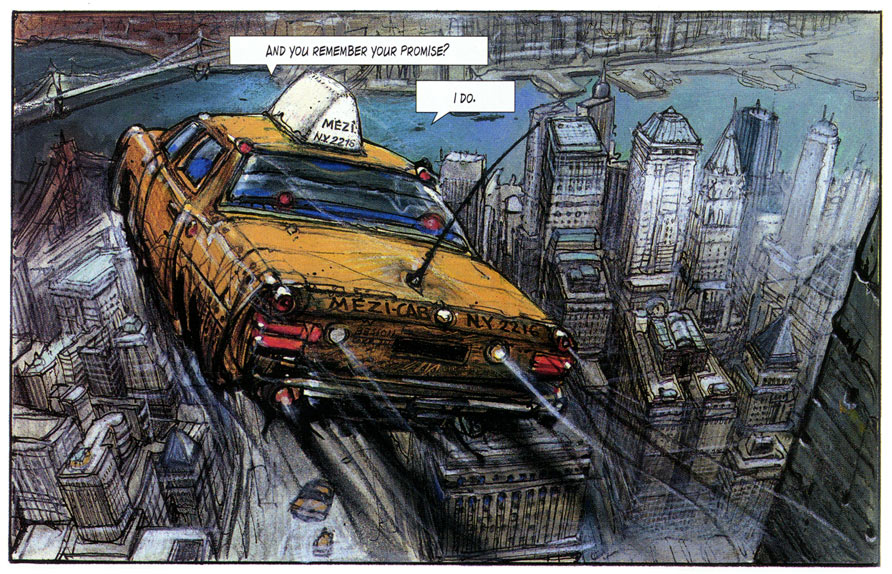
Enki Bilal
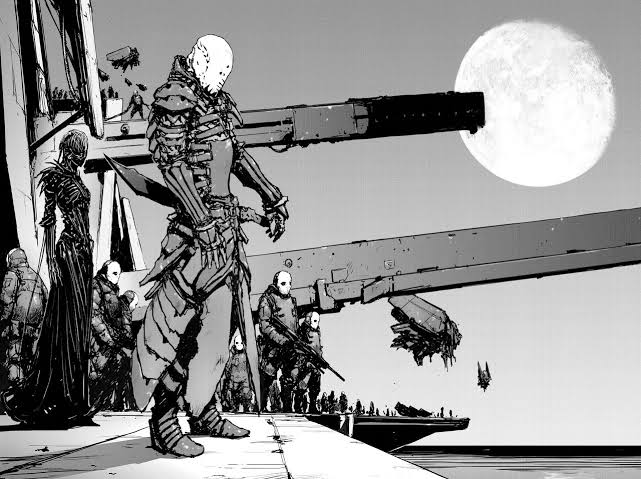
Tsutomu Nihei
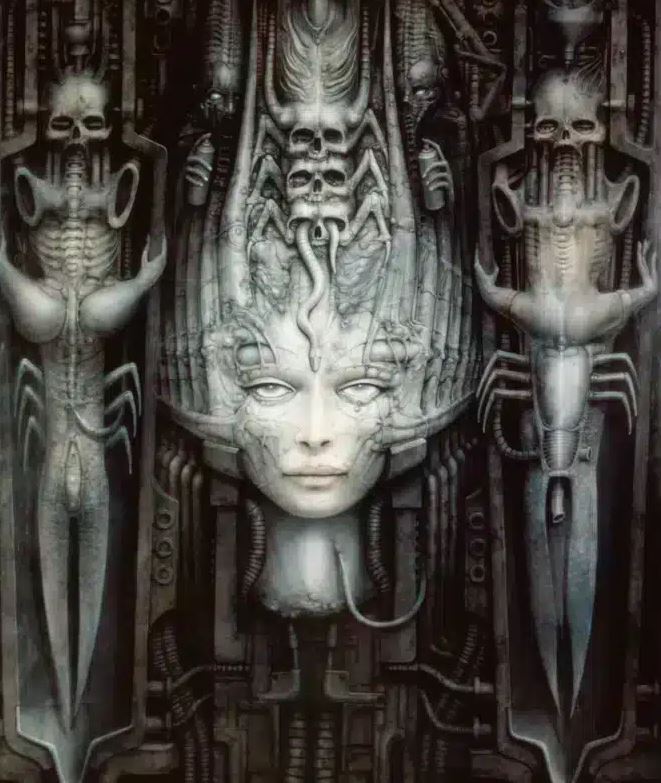
H.R. Giger
How I Work
Once I’ve got a story, I do my block-ins and roughs on one of those lined composition notebooks. This is where I start figuring out panel arrangements, staging, poses, expressions, camera angles, backgrounds, etc. Sometimes, as I’m figuring this part out, I’ll see that the images can carry more storytelling weight than I originally thought, so I’ll go back and adjust the script.
Then I scan them and bring the scans into a template Photoshop file, where I set the layer to Multiply.
At this point, I take a metaphorical step back and think about whether I can improve any aspect of what I’m seeing. Sometimes I’ll think of a better way to express a moment in time, a more dramatic angle, or a composition that will better fit the overall style of the book. Most of the adjustments I make at this stage serve image clarity. That said, recently, while going back over an old story, I noticed that changes I made at this stage may have created a more interesting page, but at the cost of storytelling clarity! Ouch.
Each panel is typically its own layer. This lets me lock the layer so I can paint with large brushes without worrying about masks or selections, keeping me from slopping over into other panels.
Once I’ve painted the page, I copy and paste my text, tweak the word arrangement, then use custom shapes for the word bubbles. And to make life easier, I always make a text group for the text, word bubbles, and tails. More recently (and this should have been obvious much, much earlier), I’ve been doing this step before painting to ensure I don’t render stuff that will never be seen and so I know there is room for these elements to breathe.
One other lesson learned the hard way: since I couldn’t spell my way out of a box, I always copy and paste my text from a Google doc. I never edit text in Photoshop. I’m a bit dyslexic, so I often don’t even notice if I’ve transposed characters.
Now that I’ve been doing this process for a few months, a page takes me from 6 to 10 hours, depending on complexity.
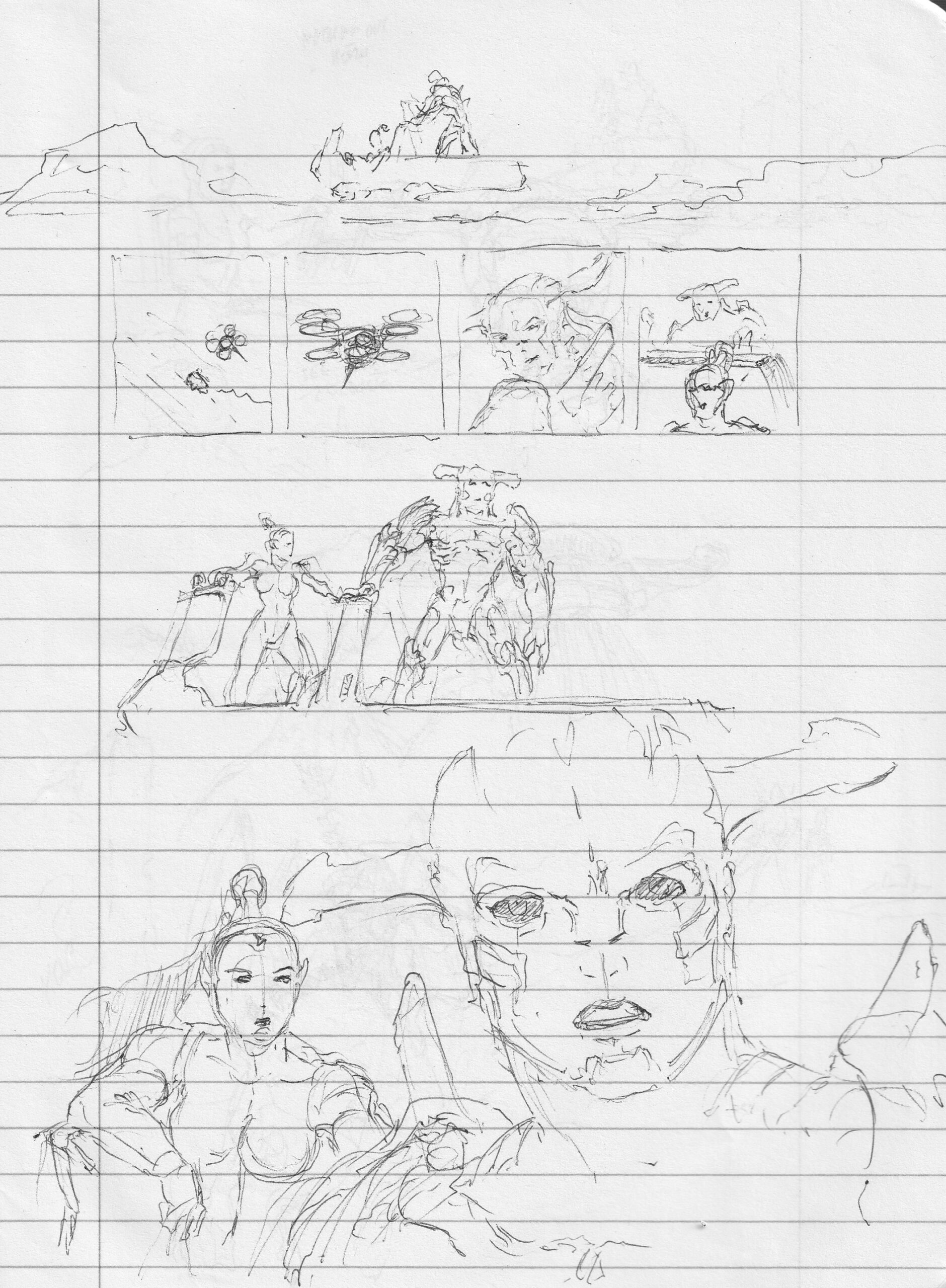
Scanned notebook rough.
How I Use 3d in My Work
After so many years doing 3D art, it was natural to use it in my work. But at least for characters, I found that they always ended up looking stiff. It didn’t matter what camera angles, camera lenses, or crazy character poses I used; they just looked dull. One thing those character models did provide was an exact arrangement of details, but even that started getting in the way, because being slavish to the character details on occasion made the character harder to read.
The places where 3D models really help me are what we in the video industry call hard-surface models. Things like architecture, vehicles, or complex props. I hate drawing vehicles, so having something I can essentially trace over helps a lot. The funny thing is, tracing a vehicle rendering just isn’t fun, so now I’m starting to use those models as visual references to copy from rather than tracing over.
A lit 3D model can really help you create scenes with realistic lighting. But this can be a two-edged sword because, if you slavishly follow the rendering, your characters might get lost in the scene. So I’ll render my model or scene, trace it, drop in my characters, then block out the lighting roughly to see if everything reads. One personal axiom is to try to make each panel easy to parse; comics should be a joy to read. I don’t want people to have to work to understand the story or events.
Overall, I’ve found the best use of 3D models is for complex things you have to draw over and over and want to maintain important details/arrangements, like the church/bastion in Jasper, Solen’s helmet, or the hover tank in Saving Eden.
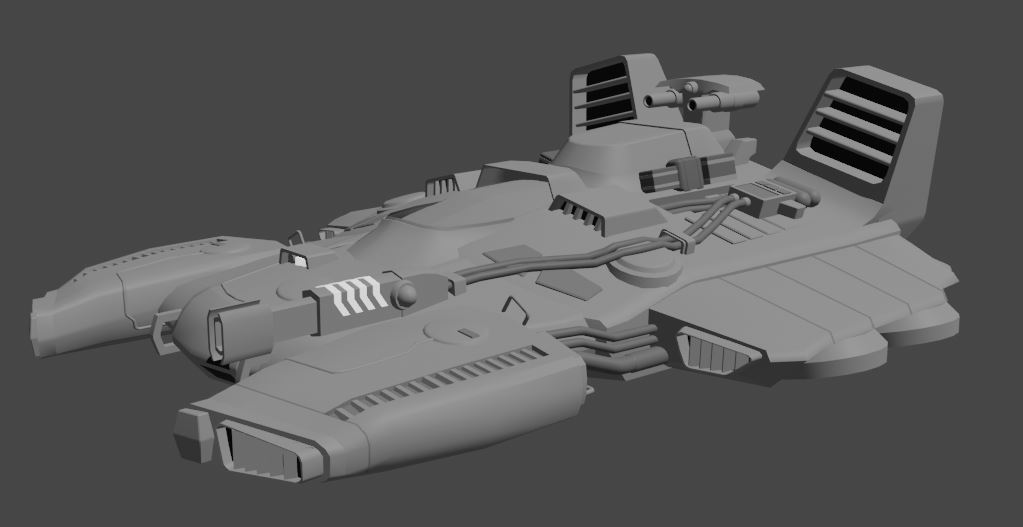
Hover Tabn 3D model for Saving Eden.
A FEW COMPLETELY UNIMPORTANT FACTS
Favorite comic: It’s a tie between Akira and Biomega.
Favorite artist: It’s a tie between Tsutomu Nihei and Enki Bilal.
Favorite movie: It’s a tie between Alien, John Carpenter’s The Thing, and the original Blade Runner (yes, with the VO).
Favorite monster: Godzilla (the first time I saw the original B&W as a child, I cried when they killed him).
Favorite fictional spaceship: the Space 1999 Eagle.
Most overused word in my scripts: ‘Huh?’ or ‘What?’
A thing I have spent far too much time researching: how gangs operate.
A thing I will probably put in my next comic: a strange little character my wife insists belongs in an anthology I’m working on.
A thing I have spent far too much time thinking about: where does the trash go? For one of my comics currently in development.
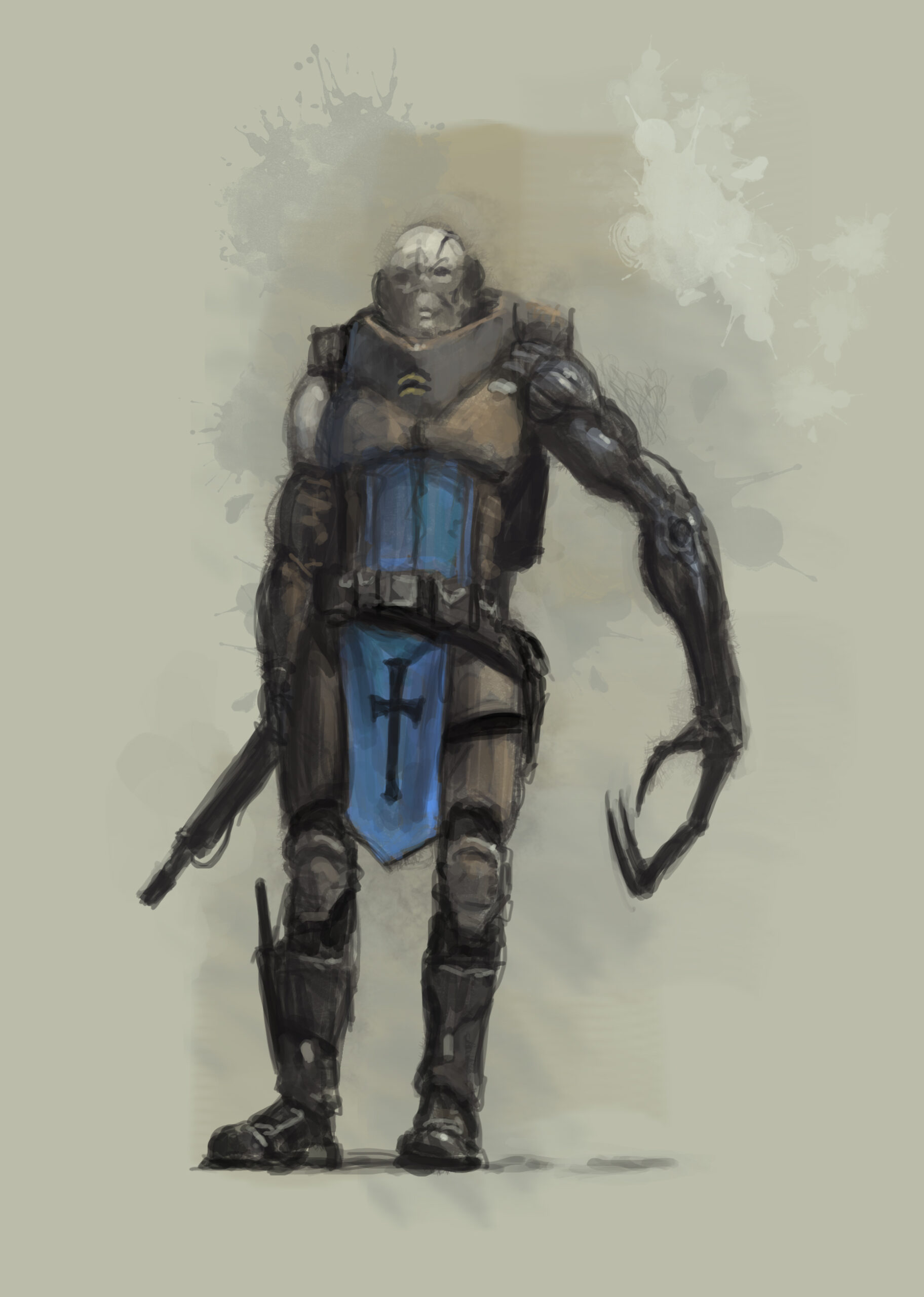
I often prefer my loose sketches to finished renderings. Probably something to do with the amount of effort vs. the finished product.
My Comics
That’s more then enough about me.
The interesting stuff is over here.